
Research
BRIDGES for Dementia Network + will help develop technologies that enable people living with dementia to live full and independent lives. BRIDGES activities will focus on four themes to improve quality of life.
Research Themes
Indoor and outdoor spaces:
Using technology to make homes and public spaces easier to navigate and stay connected.
Arts, sports and culture:
Exploring creative technologies that support mood, memory and identity.
In-person and online communication:
Developing tools that make communication clearer and more meaningful.
Digital technology development and translation:
Ensuring new technologies are trustworthy, affordable and shaped with people living with dementia.
Indoor and outdoor spaces
Theme Leads

Prof. Tao Cheng
Professor of GeoInformatics in the Department of Civil, Environmental, and Geomatic Engineering at University College London
Tao's interdisciplinary expertise spans AI and big data, network complexity, Geographical Information Science (GISci), and smart cities.

Assoc. Prof. Hua Zhong
Associate Professor, London South Bank University
Hua specialises in sustainable building technologies and environmental control, researching how these influence spaces for ageing and dementia.
Theme Overview
Indoor and outdoor spaces can be difficult to navigate for people living with dementia. Dementia-friendly community initiatives can help address issues such as poor natural light and confusing layouts. While outdoor spaces can be enjoyable, they also present challenges including uneven surfaces, changing light, and limited seating. WHO guidance on dementia-inclusive societies emphasises supporting people with dementia to remain active in their neighbourhoods.
Key design features include consistent layouts and clear wayfinding. Apps could support navigation indoors (e.g. supermarkets using store layouts) and outdoors (e.g. parks with mapped routes), using natural language processing and sensors to aid orientation.
These apps could also support social connection with carers and networks. Such technology development is supported by facilities like the Kent and Medway Digital Health Lab, which provides a dedicated space to simulate healthcare environments and enable research, prototyping, and collaboration between humans, virtual agents, and robots.
Arts, sports and culture
Theme Leads

Prof. Christian Morgner
Professor of Digital Culture and Social Innovation, University of Portsmouth
Christian's research lies within fields like complexity studies, network analysis and creative practices, with a particular focus on diversity and inclusivity
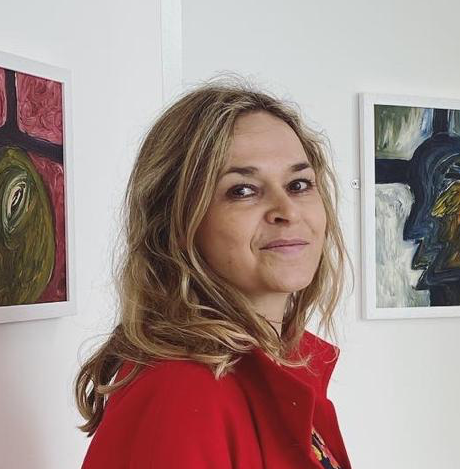
Prof. Victoria Tischler
Professor of Behavioural Science, University of Surrey
Victoria has expertise in working with older adults with dementia and adults who are neurodiverse or who experience mental health issues.
Theme Overview
Arts, sports and cultural interventions support the policy goal highlighted by Professor Chris Whitty of improving quality of life to reduce the impact of dementia over time. These activities enhance mental and physical independence and overall wellbeing. Research on psychosocial interventions shows positive effects on mood, social engagement and cognition, supporting everyday independence such as communication and daily tasks.
Technology can further enable participation in arts, sports and culture, particularly for people living alone, remotely, or with communication difficulties. Music, visual arts and exercise are also increasingly integrated into assistive technologies to promote activity, safety and daily functioning. Addressing the lack of a holistic approach, BRIDGES will develop the Creative Multi-Sensory Independence Support Framework (CMISF), which frames independence across cognitive, emotional, social and physical dimensions through multi-sensory, technology-enabled arts, sports and cultural interventions.
In-person and online communication
Theme Leads

Prof. Chee Siang (Jim) Ang
Professor of Human-Computer Interaction, University of Kent and Kent & Medway Medical School
Jim designs and deploys digital technologies such as VR, AR and sensing systems to improve healthcare and wellbeing.

Prof. Anna Korhonen
Professor of Natural Language Processing at the University of Cambridge
Anna co-directs the Language Technology Laboratory (LTL). She is particularly interested in human-centric AI that draws on the understanding of human cognitive, social and creative intelligence and focuses applications aimed at social and global good.
Theme Overview
Effective in-person and online communication is essential for people living with dementia to connect with others, feel understood and remain active in their communities. As dementia progresses, adaptable tools are needed to support communication across the journey. We envisage developing language models tailored for people with dementia that simplify and clarify language by reducing complexity and jargon. These models would support natural-language apps, including indoor and outdoor navigation tools, and adapt over time to users’ changing abilities and preferences.
We will explore conversational AI and virtual human systems that provide meaningful engagement, companionship and support with daily tasks, navigation and wellbeing monitoring. By integrating data from wearables, diaries and health records, these systems could offer personalised reminders and early detection of concerns, promoting independence. Finally, we will develop cross-platform communication tools to bridge generational gaps, integrating traditional methods such as phone calls and television with digital platforms like video conferencing and social media.
Digital technology development and translation
Theme Leads
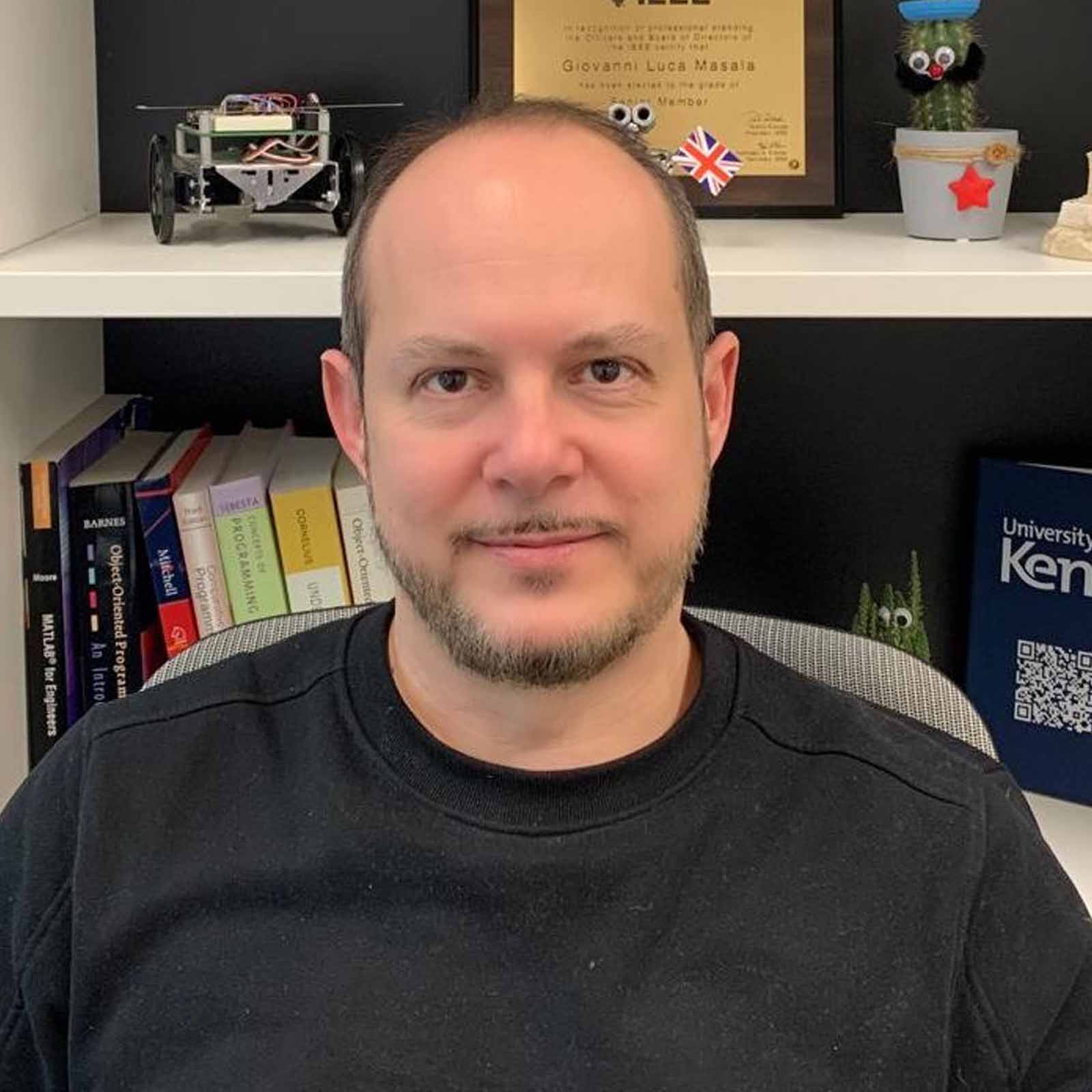
Dr. Giovanni Masala
Senior Lecturer in Computer Science, University of Kent
Giovanni's research interests include AI and computer vision in healthcare and assistive technologies; cognitive systems to create the next generation of smart robots; and Human-Robot Interaction (HRI)
Prof. Huiyu Zhou
Professor of Machine Learning, University of Leicester
Huiyu’s research sits at the interface of AI and Machine Learning and biomedical image processing
Theme Overview
Digital technology development and translation are crucial for exploring pathways and barriers to implementation across home, care and public settings. This includes designing new technologies and also adapting existing devices and platforms to align with cross-platform communication tools and other thematic applications. Examples include wearable devices and apps used to identify and validate digital biomarkers, which can be integrated into social robots and smart devices. AI can analyse digital biomarkers such as physiological, behavioural and cognitive data including sleep activity, to identify patterns and predictors of Alzheimer’s disease.
Further examples include assistive robotics, such as robot-based therapeutic interventions that support cognitive function and mental health through brain training, visual and language exercises, and physical interaction. Partnerships with people with lived experience are essential to assess these technologies, alongside recognition that high costs often create additional financial burdens for people living with dementia. Key barriers remain, including: trust and acceptability of AI and robotics, data protection concerns, and a lack of high quality and reliable data, all of which prevent wider scaling up and implementation in health and care systems.